Chronologie aller Bände (1 - 3)
Die Reihenfolge beginnt mit dem Buch "Indigenous STEM Education". Wer alle Bücher der Reihe nach lesen möchte, sollte mit diesem Band von Alberto J. Rodriguez beginnen. Der zweite Teil der Reihe "Equity in STEM Education Research" ist am 08.09.2023 erschienen. Die Reihe umfasst derzeit 3 Bände. Der neueste Band trägt den Titel "Indigenous STEM Education".
- Anzahl der Bewertungen für die gesamte Reihe: 0
- Ø Bewertung der Reihe: 0
- Start der Reihe: 07.09.2022
- Neueste Folge: 22.08.2024
Diese Reihenfolge enthält 2 unterschiedliche Autoren.
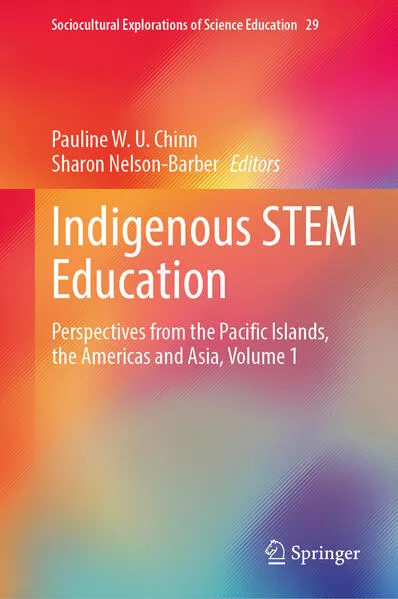
- Autor: Chinn, Pauline W. U.
- Anzahl Bewertungen: 0
- Ø Bewertung:
- Medium: Buch
- Veröffentlicht: 16.06.2023
- Genre: Politik
Indigenous STEM Education
Themes of learning from elders, through practice and place-based experiences are found across cultures. Each chapter brings a uniquely Indigenous point of view to the educational transformation efforts taking place in these distinct contexts. In the second section the chapters use authentic research stories to explain many ways in which regular disciplinary policies and practices can impact Indigenous students’ participation in STEM classrooms and careers. These authors go on to discuss ways to engage learners in STEM activities that are interconnected with the contexts of their lives.
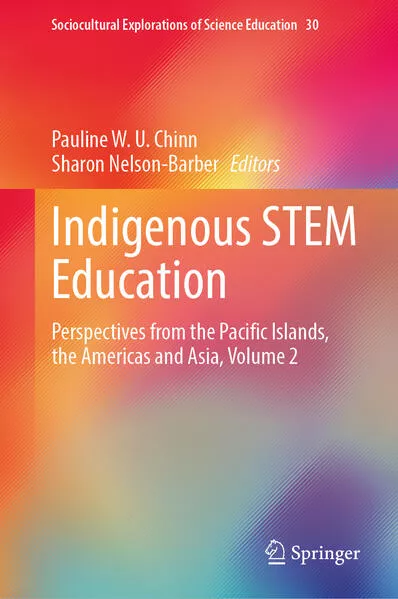
- Autor: Chinn, Pauline W. U.
- Anzahl Bewertungen: 0
- Ø Bewertung:
- Medium: Buch
- Veröffentlicht: 02.07.2023
- Genre: Politik
Indigenous STEM Education
Authors working in Eurocentric settings of schools and colleges—whether in the continental or island United States, Canada, Thailand, Taiwan or Chuuk—utilize storytelling, place, language and experiential learning to engage students in meaningful, highly contextualized study that honors ancestral knowledge and practices. They recognize that their disciplines have been structured and colonized by Eurocentric/American frameworks that lack storied, ethical contexts developed through living sustainablyin particular places. Recognizing that students seeking to enter STEM majors and careers now must be knowledgeable in multiple ways, authors describe innovative ways to immerse precollege learners as well as developing and practicing teachers in settings that intersect culture, place, heritage language, and praxis that enable Indigenous and local knowledge to become central to learning. Twenty-first century technologies of distance learning, digital story-telling, and mapping technologies now enable formerly marginalized, minoritized groups to share their worldviews and systems of knowledge.
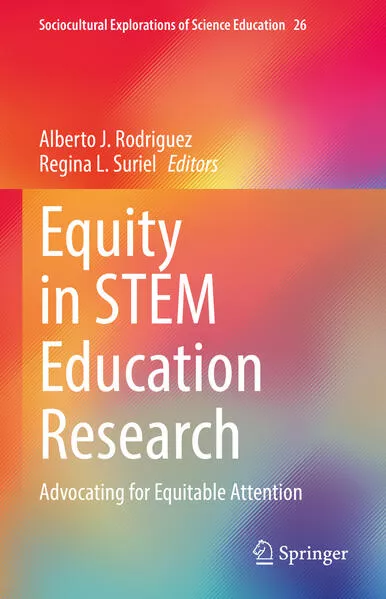
- Band: 26
- Autor: Rodriguez, Alberto J.
- Anzahl Bewertungen: 0
- Ø Bewertung:
- Medium: Buch
- Veröffentlicht: 07.09.2022
- Genre: Politik
Equity in STEM Education Research
This book focuses on the creative and transformative work of scholars who are advancing social justice through science/STEM education with limited resources. It draws attention to the significant body of work being conducted in various contexts so that readers could reflect and appreciate how much broader and transformative our impact could be if funding agencies, policy makers, and other researchers would widen their perspective and seek to promote social justice-driven scholarship.
Public funding for STEM research on K-12 and teacher education that targets special populations is often limited and tends to favor mainstream research. This book contains case studies on innovative and promising STEM research with a focus on equity, diversity and social justice that are funded with limited or no public funding. It also presents anecdotes from authors in relation to their struggles in either securing funding for their reported study or seeking to publish its findings. This provides more context to the challenges of conducting non-mainstream research in science/STEM education.Most of the contributors are scholars of color and/or women conducting research with traditionally marginalized populations in science/STEM. Thus, this book offers an additional venue to share the voices of marginalized scholars and allies seeking to broaden our understanding of the challenges and successes of promoting equity, diversity, and social justice in various educational contexts.