Chronologie aller Bände (1 - 5)
Die Reihenfolge beginnt mit dem Buch "Altägyptische Enzyklopädien". Wer alle Bücher der Reihe nach lesen möchte, sollte mit diesem Band von Alexa Rickert beginnen. Mit insgesamt 5 Bänden wurde die Reihe über einen Zeitraum von ungefähr 13 Jahren fortgesetzt. Der neueste Band trägt den Titel "The Khoiak Festival".
- Anzahl der Bewertungen für die gesamte Reihe: 0
- Ø Bewertung der Reihe: 0
- Start der Reihe: 01.01.2014
- Neueste Folge: 15.07.2026
Diese Reihenfolge enthält 5 unterschiedliche Autoren.
- Band: 7
- Autor: Alexa Rickert
- Anzahl Bewertungen: 0
- Ø Bewertung:
- Medium: Buch
- Veröffentlicht: 01.01.2014
- Genre: Sonstiges
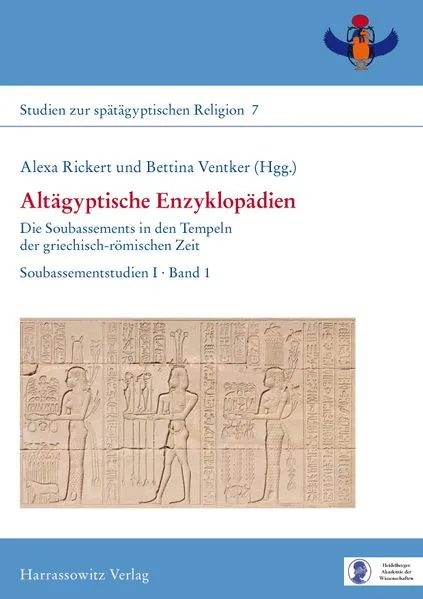
Altägyptische Enzyklopädien
Die Sockelbereiche oder Soubassements bilden mit ihren vielfältigen Gestaltungsformen einen bedeutenden Bestandteil der ägyptischen Tempeldekoration griechisch-römischer Zeit. Neben rein ornamentalen Motiven und Texten unterschiedlichster Gattung sind es vor allem Prozessionen Gaben bringender Personifikationen und Gottheiten, die diesen architektonischen Bereich schmücken. Die Inschriften und Darstellungen spiegeln dabei durch ihr breit gefächertes Themenspektrum die (religiösen) Weltvorstellungen der Alten Ägypter. So können die Soubassements als Enzyklopädien der ägyptischen Lebenswelt betrachtet werden, die wesentliche Einblicke in das priesterliche Wissen des Alten Ägypten gewähren.
Auf einer im Rahmen des Heidelberger Akademieprojekts Der Tempel als Kanon der religiösen Literatur Ägyptens organisierten internationalen Soubassement-Tagung 2012 wurde dieser besonderen Funktion der Sockelbereiche näher nachgegangen. Der von Alexa Rickert und Bettina Ventker herausgegebene zugehörige Tagungsband präsentiert die Ergebnisse in thematisch gegliederten Einzelbeiträgen und bietet unter Berücksichtigung aller Dekorationsarten erstmals einen umfassenden Überblick über die Inhalte der Soubassement-Darstellungen der späten Tempel. Dabei werden sowohl unterschiedliche Typen und ihre Charakteristika vorgestellt als auch die für die architektonische Einheit „Soubassement“ festzustellenden Gemeinsamkeiten verzeichnet. Zahlreiche Pläne einzelner Tempel, auf denen die nach inhaltlichen Kriterien unterteilten Gestaltungsformen dargestellt werden, ermöglichen zudem eine schnelle Orientierung über Vorkommen und Verteilung der jeweiligen Soubassementdekoration.
- Band: 22
- Autor: Altmann-Wendling, Victoria
- Anzahl Bewertungen: 0
- Ø Bewertung:
- Medium: Buch
- Veröffentlicht: 06.02.2019
- Genre: Sonstiges
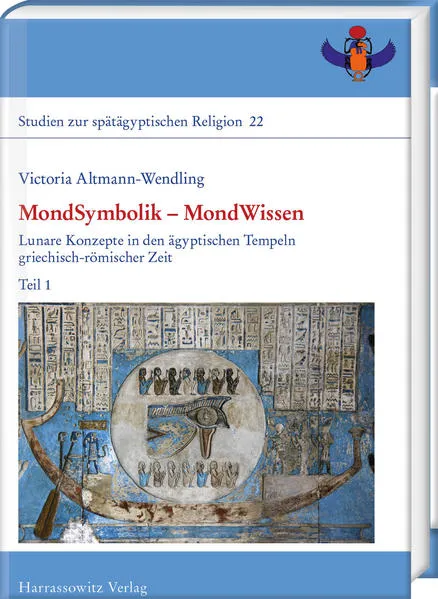
MondSymbolik – MondWissen
Teil 2 bietet eine diachrone Gesamtanalyse des Mondes im Alten Ägypten, die Darstellungstypen, Bezeichnungen und Personifikationen behandelt. Die praktische Umsetzung eines astronomischen „Mondwissens“ in Festzyklen, Ritualen und Kulten wird eingehend analysiert. Die Auswertung mündet in eine innovative Untersuchung zu Konzepten und Bildern des Mondes. Eine Vielzahl von Zuschreibungen und Identifikationen, die Phänomene und Eigenschaften des Mondes und seines Zyklus’ thematisieren, erklären und bewerten, bilden den Hintergrund einer altägyptischen „Mondsymbolik“.
- Band: 40
- Autor: Abuel-Yazid, Mohamed
- Anzahl Bewertungen: 0
- Ø Bewertung:
- Medium: Buch
- Veröffentlicht: 24.01.2024
- Genre: Roman
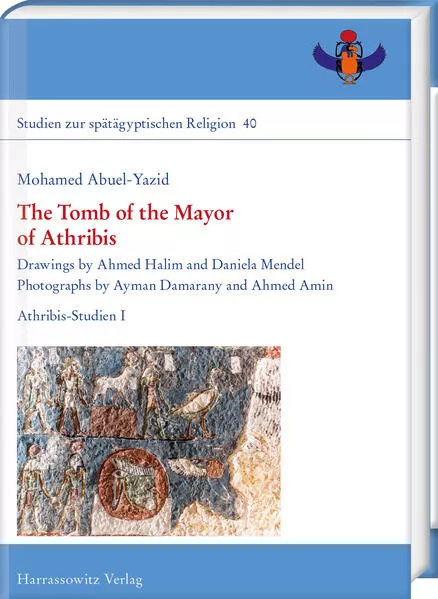
The Tomb of the Mayor of Athribis
For the first time Mohamed Abuel Yazid offers a comprehensive publication of the whole tomb including its colourful ceilings and all its long texts which make this tomb in Athribis to one of the most important ones of the early Roman period in all of Egypt. The complete decoration of the tomb is presented in facsimile drawings as well as in detailed photos. All texts are presented in hieroglyphs, transliterations and translations. Wall plans are indicating their exact positions in the tomb. The author offers also a complete glossary of the texts as well as a conclusion about dating the tomb (there are no cartouches in this monument) and its relationship with the great temple of the site.
- Band: 44
- Autor: Contardi, Federico
- Anzahl Bewertungen: 0
- Ø Bewertung:
- Medium: Buch
- Veröffentlicht: 17.07.2024
- Genre: Sonstiges
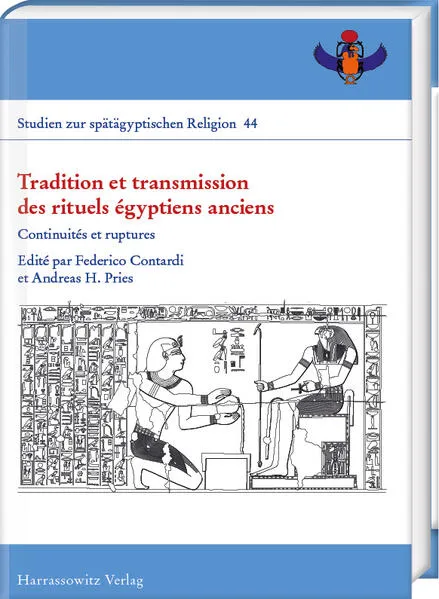
Tradition et transmission des rituels égyptiens anciens
In insgesamt 10 Fallstudien untersucht der Tagungsband, wie sich die altägyptische Ritualliteratur heute im Wechselspiel zwischen Kontinuitäten und Brüchen innerhalb der überkommenen Überlieferung darstellt. Das Spektrum der herangezogenen Quellen, die teils auch gänzlich neues Material umfassen, erstreckt sich über zahlreiche Bereiche kultischen Lebens rund um Grab und Tempel und reicht chronologisch von den Pyramidentexten bis in die Römerzeit. Zentraler Bezugspunkt der meisten Beiträge ist die Funerärliteratur, die neben dem Grab auch in anderen Kontexten rezipiert wird.
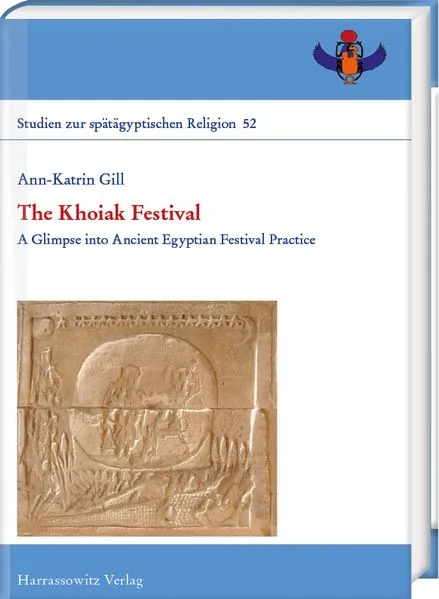
- Band: 52
- Autor: Gill, Ann-Katrin
- Anzahl Bewertungen: 0
- Ø Bewertung:
- Medium: Buch
- Veröffentlicht: 15.07.2026
- Genre: Sonstiges
The Khoiak Festival
Ann-Katrin Gill presents the first comprehensive analysis of the so-called “Khoiak Festival”, one of the most important festivals in ancient Egypt. Each year during the month of Khoiak (the fourth month of the inundation season), it was celebrated in honour of the god Osiris to commemorate his resurrection and guarantee the stability of the Egyptian state. The study is based primarily on two sources: the so-termed Dendera Khoiak Inscription in the first eastern Osiris chapel on the roof of the Hathor temple in Dendera and Papyrus Louvre N. 3176 (S). Hieroglyphic transcriptions as well as a complete transliteration and translation of these texts are provided, followed by a thorough commentary. In addition to ‘official’ writings that describe the festivities in detail, references to their representation on ‘private’ monuments and documents are discussed. Based on these and a variety of other sources, this study outlines a model or basic concept of what the Khoiak Festival might have looked like in Greco-Roman Period. This highlights correlations between ritual texts and cult architecture as well as links between text and archaeological artefacts, including temple structures on the one hand and objects connected with the festival on the other. Furthermore, the author examines at what point in Egyptian history the Khoiak Festival was established. Ultimately, this study contributes not only to a better understanding of the Khoiak Festival as such, but also to the festival cycle and belief system of the ancient Egyptians in general.