Chronologie aller Bände (1 - 2)

Die Reihenfolge beginnt mit dem Buch "From Hannibal to Sulla". Wer alle Bücher der Reihe nach lesen möchte, sollte mit diesem Band von Carsten Hjort Lange beginnen. Die Reihe umfasst derzeit 2 Bände. Der neueste Band trägt den Titel "How Republics Die".
- Anzahl der Bewertungen für die gesamte Reihe: 3
- Ø Bewertung der Reihe: 5
- Start der Reihe: 29.01.2024
- Neueste Folge: 19.05.2025
Diese Reihenfolge enthält 2 unterschiedliche Autoren.
- Band: 1
- Autor: Lange, Carsten Hjort
- Anzahl Bewertungen: 0
- Ø Bewertung:
- Medium: Buch
- Veröffentlicht: 29.01.2024
- Genre: Roman
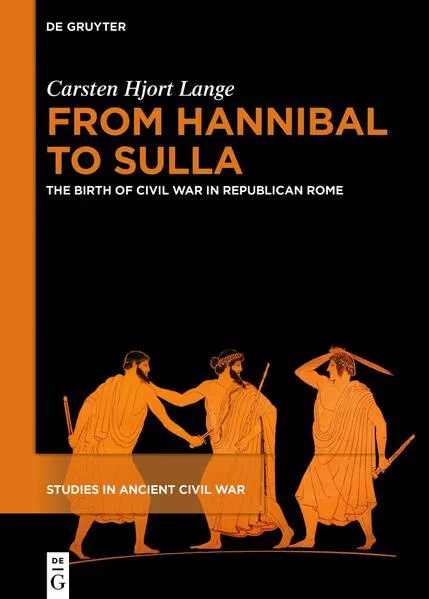
From Hannibal to Sulla
The second century BCE was a time of prolonged debate at Rome about the changing nature of warfare. From the outbreak of the Second Punic War in 218 to Rome’s first civil war in 88 BCE, warfare shifted from the struggle against a great external enemy to a conflict against internal parties. This book argues that Rome’s Italian subjects were central to this development: having rebelled and defected to Hannibal at the end of the third century, the allies again rebelled in 91 BCE, with significant consequences for Roman thought about warfare as such. These "rebellions" constituted an Italian renewal of the war against their old conqueror, Rome, and an internal war within the polity. Accordingly, we need to add 'internal war' to the already well-established dichotomy of foreign and civil war.
This fresh analysis of the second century demonstrates that the Roman experience of internal war during this period provided the natural stepping-stone in the invention of civil war as such. It conceives of the period from the Second Punic War onward as an 'antebellum' period to the later civil war(s) of the Late Republic, during which contemporary observers looked back at the last 'great war' against Hannibal in preparation for the next conflict.
- Band: 4
- Autor: Vervaet, Frederik Juliaan
- Anzahl Bewertungen: 3
- Ø Bewertung: 5.0
- Medium: Buch
- Veröffentlicht: 19.05.2025
- Genre: Sonstiges
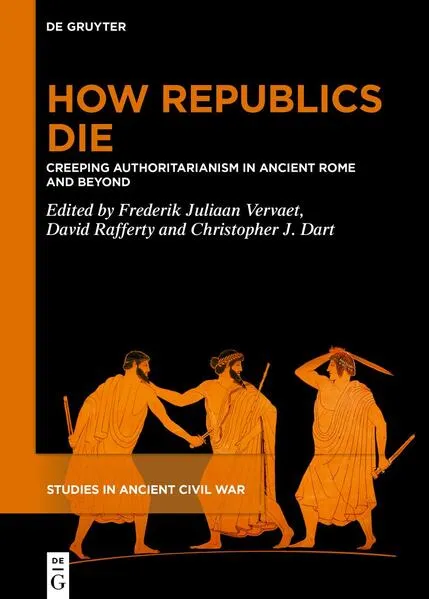
How Republics Die
Authoritarianism is everywhere on the advance; democracies seem fragile and threatened. We console ourselves that where rule by the people has long established itself, it has never collapsed from internal causes. Except it did, once: in Rome.
This book gathers together Roman historians with political scientists and scholars of other periods of authoritarian takeover to explore how open and democratic political systems have historically fallen prey to autocrats. The Late Roman Republic is the main focus, with a mix of large-scale thematic and analytical chapters paired with more detailed case studies, from some of the leading scholars in the field. Other chapters widen the scope, analysing comparable cases from ancient Athens to Napoleon to Hitler’s Germany and Franco’s Spain.
The book as a whole draws on contemporary political science scholarship on democratic decay and competitive authoritarianism. It shows that these concepts are not only applicable to modern states, but that we can properly use them to study past democratic collapses as well. This provides the tools for a more historically-informed understanding of how republics die, as part of a renewed conversation between historians and political scientists.