Chronologie aller Bände (1 - 2)
Die Reihenfolge beginnt mit dem eBook "Das Proprium der Rechtswissenschaft". Wer alle eBookz der Reihe nach lesen möchte, sollte mit diesem Band von Christoph Engel beginnen. Der zweite Teil der Reihe "Sinnbild Verfassung" ist am 31.05.2026 erschienen. Mit insgesamt 2 Bänden wurde die Reihe über einen Zeitraum von ungefähr 5 Jahren fortgesetzt. Der neueste Band trägt den Titel "Sinnbild Verfassung".
- Anzahl der Bewertungen für die gesamte Reihe: 0
- Ø Bewertung der Reihe: 0
- Start der Reihe: 01.06.2021
- Neueste Folge: 31.05.2026
Diese Reihenfolge enthält 2 unterschiedliche Autoren.

- Autor: Engel, Christoph
- Anzahl Bewertungen: 0
- Ø Bewertung:
- Medium: E-Book
- Veröffentlicht: 01.06.2021
- Genre: Sonstiges
Das Proprium der Rechtswissenschaft
- Autor: Akbarian, Samira
- Anzahl Bewertungen: 0
- Ø Bewertung:
- Medium: Buch
- Veröffentlicht: 31.05.2026
- Genre: Sonstiges
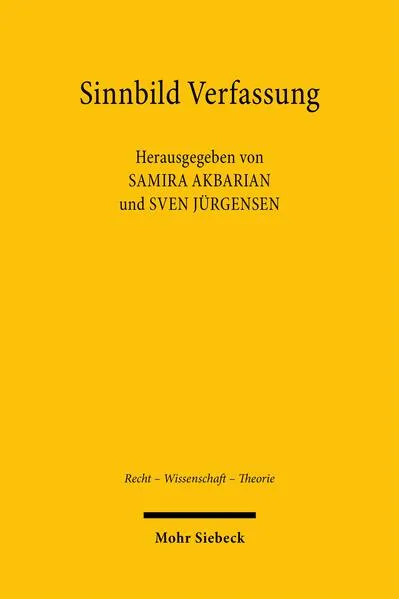
Sinnbild Verfassung
The edited volume examines the constitution as a symbol and explores its cultural, political, and normative dimensions beyond its strictly legal content. It is based on the observation that constitutions not only structure social orders but also generate narratives, shape identities, and frame conflicts. Especially in comparison to the symbolically charged U.S. constitutionalism, the German Basic Law lacks a revolutionary founding moment and tangible constitutional documents. This gives rise to the guiding research question: How does a constitution produce symbolic force-historically, in the present, and for the future? The volume does not conceive of the constitution as a closed system of norms but as an open emblem of collective self-understanding. It shows that symbolic references are not an accessory but a prerequisite for normative validity. The contributions situate the symbolic power of constitutions in the interplay between history and the present, ritual and critique, political identity and societal contestation, and between the national and European levels. They reveal how constitutional narratives emerge, how they remain contested, and how they provide orientation in times of crisis-while also producing exclusions and generating blind spots. The focus of the work thus lies on the constitution as a cultural repository, a projection surface, and a performative practice. The volume understands constitutional symbolism as a dynamic process: it links past and future, creates belonging within plurality, and remains open to reevaluation. The constitution appears not as a static text but as a living site of social negotiation.