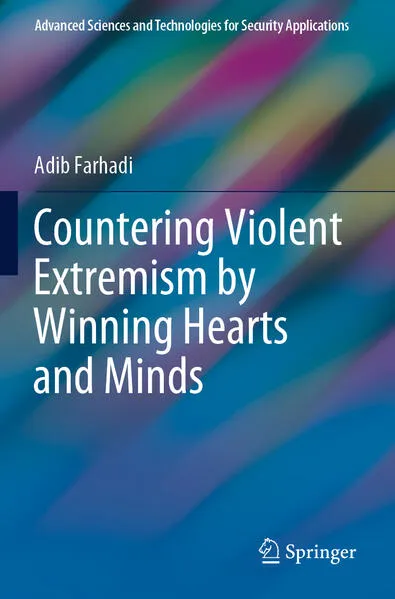
Countering Violent Extremism by Winning Hearts and Minds
Since 9/11, the United States and its allies have been waging an endless War on Terror to counter violent extremism by “winning hearts and minds,” particularly in Afghanistan. However, violent extremism remains on the rise worldwide.
The effort and sacrifice of the War on Terror have been continually undermined by actions, narratives, and policies that many of the 1.8 billion Muslims worldwide perceive as Islamophobic. Incidents of Islamophobia on the part of Western governments, media, and civilians, whether intentional or unintentional, alienate the majority of Muslims who are law-abiding and would be key allies in the fight against violent extremism. In Afghanistan, for example, violent extremist groups portray U.S. and NATO forces as blasphemous, anti-Muslim invaders to frighten Afghan villagers into compliance. A similar perception weakens domestic countering violent extremism programs in the West that rely on cooperation with Muslim communities.
As theGreat Powers Competition emerges among the U.S., Russia, and China, America and the West can ill afford any further impairment in their counterterrorism strategy. The dangers of Islamophobia must be recognized and eradicated immediately.
In Countering Violent Extremism by Winning Hearts and Minds, Adib Farhadi demonstrates how Islamophobia poses a threat to U.S. national security by utilizing historical context, statistical analysis, and in-depth case studies. Farhadi, who headed Afghanistan’s National Development Strategy, describes how Koran burnings, anti-Islamic rhetoric, and racial profiling harm relationships with the majority of Muslims who are not involved in violent extremism and thus perpetuate the War on Terror.
America has sacrificed thousands of lives and has spent more than $6 trillion on the War on Terror. It can ill afford to squander more valuable resources in a strategy undermined by Islamophobia or perception of Islamophobia. As Farhadi explains, only through a reconciliatory narrative, can we work toward a shared future where violent extremism is eradicated.
This book is essential reading for scholars, policymakers, practitioners, and executives who are invested in maintaining and rebuilding American credibility essential to global security and peace.


Unterstütze den lokalen Buchhandel
Nutze die PLZ-Suche um einen Buchhändler in Deiner Nähe zu finden.
Bestelle dieses Buch im Internet



| Veröffentlichung: | 08.08.2021 |
| Höhe/Breite/Gewicht | H 23,5 cm / B 15,5 cm / - |
| Seiten | 137 |
| Art des Mediums | Buch [Taschenbuch] |
| Preis DE | EUR 106.99 |
| Preis AT | EUR 109.99 |
| Reihe | Advanced Sciences and Technologies for Security Applications |
| ISBN-13 | 978-3-030-50059-7 |
| ISBN-10 | 3030500594 |

Über den Autor
Dr. Adib Farhadi is an Assistant Professor and Faculty Director of Executive Education at the University of South Florida. His research, which is at the intersection of religion, politics, and conflict with a particular focus on the “Silk Road” Central and South Asia (CASA) Region, is the subject of his recent book, Countering Violent Extremism by Winning Hearts and Minds. He is the Director of the Great Power Competition Conference Series and a frequent presenter on Countering Violent Extremism (CVE), Conflict Resolution, Strategic Negotiations & Communication, and Geoeconomics. Formerly Dr. Farhadi served in senior positions for Afghanistan and extensively advised the United States government and various other international organizations. Dr. Farhadi earned his Ph.D. in Economics from the University of Canberra, M.A. from New York University, and B.S. from East Carolina University.
Dr. Anthony Masys is an Associate Professor and Director of Global Disaster Management, Humanitarian Assistance and Homeland Security. A former senior Air Force Officer, Dr. Masys has a BSc in Physics and MSc in Underwater Acoustics and Oceanography from the Royal Military College of Canada and a Ph.D. from the University of Leicester. He is Editor in Chief for Springer Publishing book series: Advanced Sciences and Technologies for Security Applications and holds various advisory board positions with academic journals and books series.
Dr. Masys is an internationally recognized author, speaker and facilitator and has held workshops on security, visual thinking, design thinking and systems thinking in Europe, Canada, South America, West Africa and Asia. He has published extensively in the domains of physics and the social sciences.
Dr. Masys supports the University of Leicester (U.K.) as an associate tutor in their Distance MSc Program on Risk Crisis and Disaster Management.
Diesen Artikel teilen
0 Kommentar zu diesem Buch
... weitere Publikationen von Farhadi, Adib



.... weitere Publikationen von Springer International Publishing





Formalwissenschaftlicher Beweis der Existenz Gottes über kalkül - Mathematische Philosophie und Philosophie der Grammatik
Bewerbungsfrist bis zum: 29.10.2026