Chronologie aller Bände (1 - 3)
Die Reihenfolge beginnt mit dem Buch "Architectonics Books / The Digital, a Continent?". Wer alle Bücher der Reihe nach lesen möchte, sollte mit diesem Band von Miro Roman beginnen. Der zweite Teil der Reihe "Architectonics Books / The Digital, a Continent?" ist am 15.11.2023 erschienen. Die Reihe umfasst derzeit 3 Bände. Der neueste Band trägt den Titel "Architectonics Books / Upon Entropy".
- Anzahl der Bewertungen für die gesamte Reihe: 0
- Ø Bewertung der Reihe: 0
- Start der Reihe: 26.01.2022
- Neueste Folge: 15.12.2023
Diese Reihenfolge enthält 3 unterschiedliche Autoren.
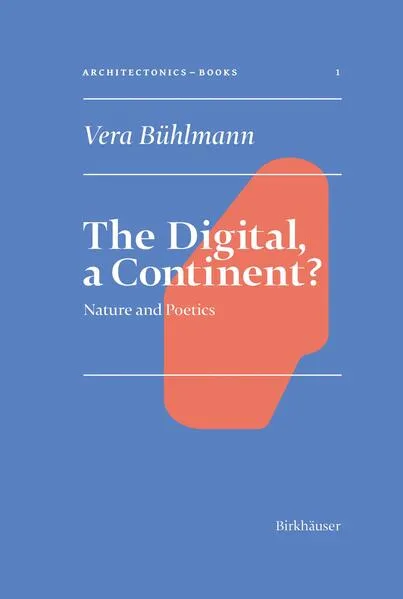
- Autor: Bühlmann, Vera
- Anzahl Bewertungen: 0
- Ø Bewertung:
- Medium: Buch
- Veröffentlicht: 15.11.2023
- Genre: Sonstiges
Architectonics Books / The Digital, a Continent?
In The Digital, a Continent?, the author argues in favor of a way of thinking about digital technology that draws on the new materialism. She uses photosynthesis and nuclear fission as examples of processes that are as artificial as they are natural to explain how digital technology can be viewed within the paradigm of a "communicative physics" in which poetics interacts with mathematical thinking. The author concludes that we can better understand ourselves and digital technology by developing notions of the multifaceted ways energy, form, and intellect interact in global architectonics.
- Theoretical consideration of digital technology
- Visual language and science
- New volume in the Applied Virtuality Book Series
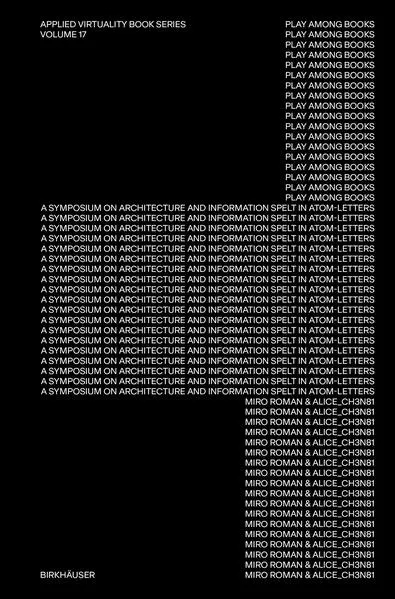
- Band: 17
- Autor: Roman, Miro
- Anzahl Bewertungen: 0
- Ø Bewertung:
- Medium: Buch
- Veröffentlicht: 26.01.2022
- Genre: Roman
Play Among Books
Wie verändert Codierung unser Denken über Architektur? Eine Frage, die in der Forschung eine wichtige Perspektive eröffnet.
Miro Roman und seine KI Alice_ch3n81 entfalten in diesem Buch ein wahrhaft spielerisches Szenario, in dem sie Codierung als neue Alphabetisierung für Informationen vorschlagen. Erkenntnis vermittelt es in Form eines Projektmodells, das die Bereiche Architektur und Information durch zwei verflochtene Erzählstränge in einem „unendlichen Fluss" realer Bücher miteinander verknüpft. Mit dem Fokus auf der Schnittmenge von Informationstechnologie und architektonischer Formulierung entsteht so eine immer weiterführende intellektuelle Reflexion zu digitaler Architektur und Computerwissenschaft.
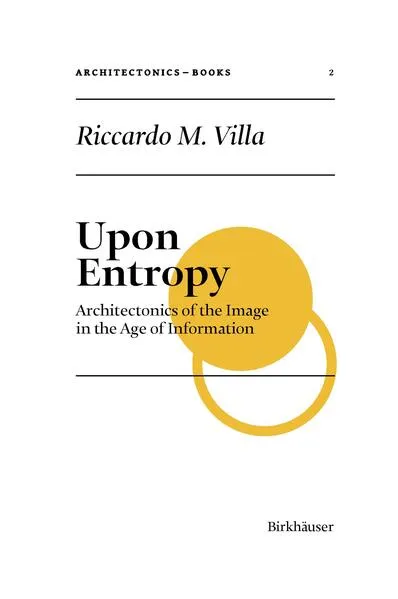
- Band: 23
- Autor: Villa, Riccardo M.
- Anzahl Bewertungen: 0
- Ø Bewertung:
- Medium: Buch
- Veröffentlicht: 15.12.2023
- Genre: Sonstiges
Architectonics Books / Upon Entropy
- Naturwissenschaft im Zeichen der Postmoderne
- Quantenmechanik und Informationstheorie
- Neuer Band der Reihe Applied Virtuality Book Series
In seinem 1979 erschienenen Essay Das postmoderne Wissen stellte Jean-François Lyotard fest, dass die Einführung des Computers ein Stadium des Fortschritts definiert, in dem Wissen zur Ware wird. Moderne und Postmoderne erscheinen als zwei Stadien eines Prozesses, der aus dem Konflikt der Wissenschaft mit den Narrativen resultiert: Während die Wissenschaft versucht, sich vom Narrativen zu distanzieren, muss sie ihre eigene Legitimation schaffen. Die vorliegende Abhandlung greift die Herausforderung im Zeichen des Bildes auf. Das Bild ist genau das, wovon sich die moderne Wissenschaft auf der Suche nach absoluter Transparenz zu befreien versucht. Diese Transparenz wird unter architektonischen Gesichtspunkten untersucht, die von der Philosophie bis zur Quantenmechanik, von der Theologie bis zur Informationstheorie reichen.