Chronologie aller Bände (1 - 4)

Die Reihenfolge beginnt mit dem Buch "Sprache(n) des Geschichtsunterrichts". Wer alle Bücher der Reihe nach lesen möchte, sollte mit diesem Band von Christoph Bramann beginnen. Der zweite Teil der Reihe "Lernaufgaben im Geschichtsschulbuch" ist am 09.12.2024 erschienen. Mit insgesamt 4 Bänden wurde die Reihe über einen Zeitraum von ungefähr 6 Jahren fortgesetzt. Der neueste Band trägt den Titel "Geschichtsdidaktik im Wandel".
- Anzahl der Bewertungen für die gesamte Reihe: 0
- Ø Bewertung der Reihe: 0
- Start der Reihe: 16.11.2020
- Neueste Folge: 14.09.2026
Diese Reihenfolge enthält 3 unterschiedliche Autoren.
- Autor: Bramann, Christoph
- Anzahl Bewertungen: 0
- Ø Bewertung:
- Medium: Buch
- Veröffentlicht: 16.11.2020
- Genre: Sonstiges
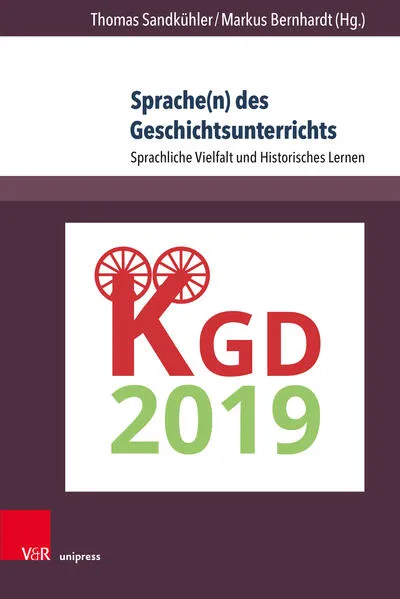
Sprache(n) des Geschichtsunterrichts
in Kooperation mit Christoph Bramann, Nicola Brauch, Saskia Handro, Martin Lücke, Martin Nitsche, Martin Schlutow und Jörg van Norden
This volule focuses on the challenges of language and linguistic heterogeneity for historical learning in schools. In view of the increasing cultural and social diversity in classrooms, the topic seems more current than ever. The contributions in the volume deal with the linguistic prerequisites that pupils need for subject-related reading and writing, for historical thinking and argumentation, and how such activities can be encouraged in history lessons. It has become clear that history as a language subject is very demanding and requires the students to think and express themselves in an elaborate way due to its high degree of abstraction.
in cooperation with Christoph Bramann, Nicola Brauch, Saskia Handro, Martin Lücke, Martin Nitsche, Martin Schlutow and Jörg van Norden
- Autor: Bramann, Christoph
- Anzahl Bewertungen: 0
- Ø Bewertung:
- Medium: Buch
- Veröffentlicht: 09.12.2024
- Genre: Sonstiges
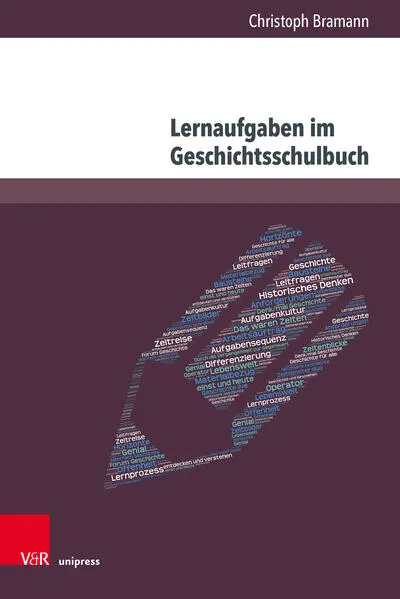
Lernaufgaben im Geschichtsschulbuch
Is the exercise culture in history schoolbooks centred on historical thinking? The present volume explores this question with the help of a categorial analysis of Austrian and German history schoolbooks. Therefore, the schoolbooks are being qualitatively analysed and quantitatively evaluated according to the implementation of central criteria for learning exercises in the context of a specialised exercise culture. Thus, the survey offers a representative insight into the exercise culture of the examined schoolbooks and empirically assists the transformation process towards history lessons that support historical thinking. Moreover, the author offers a new perspective on theoretical and practical gaps in context of research and implementation of an exercise culture on historical thinking – not exclusively in history schoolbooks.

- Autor: Buschmann, Christian
- Anzahl Bewertungen: 0
- Ø Bewertung:
- Medium: Buch
- Veröffentlicht: 10.03.2025
- Genre: Sonstiges
Theorie und Empirie – ein unzertrennliches Paar?
Focusing theoretical and empirical research and balancing its proportions in current projects was the aim of the Early Career Researcher's congress, organized by the Conference of History Didactics in July 2023. There, Early Career Researchers presented and discussed their projects reflecting on their theoretical background and empirical design. In doing so, several new approaches were introduced for developing the field of history didactics.
- Autor: Barsch, Prof. Dr. Sebastian
- Anzahl Bewertungen: 0
- Ø Bewertung:
- Medium: Buch
- Veröffentlicht: 14.09.2026
- Genre: Sonstiges
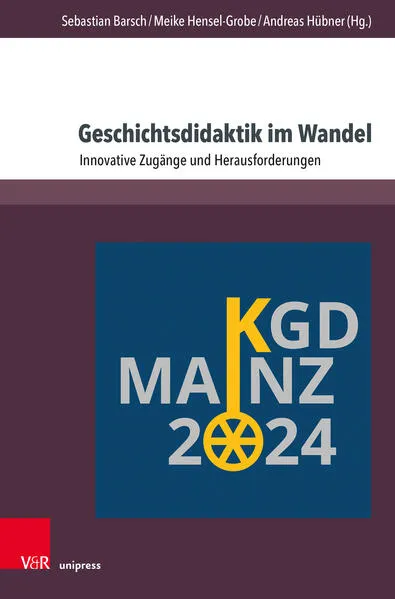
Geschichtsdidaktik im Wandel
Der Band »Geschichtsdidaktik im Wandel« versteht sich als Beitrag zur Reflexion gegenwärtiger Transformationsprozesse, die sich aus gesellschaftlichen, medialen und technologischen Entwicklungen für historisches Lernen und historisches Denken ergeben. Die Beiträge eröffnen ein breites thematisches Spektrum: Diskutiert werden neue Zugänge ebenso wie Erweiterungen und Präzisierungen bestehender Ansätze. Behandelt werden Fragen der Digitalität, des Einsatzes von VR-Anwendungen sowie der Zukunft historischen Lernens. Ein zentraler Bezugspunkt vieler Beiträge ist die Frage, inwiefern Konzepte wie Geschichtsbewusstsein und historische Urteilsbildung unter Bedingungen fortschreitender Mediatisierung und algorithmisch strukturierter Informationsumgebungen tragfähig bleiben oder theoretisch neu konturiert werden müssen. Darüber hinaus wird die wachsende Bedeutung partizipativer und performativer Formate historischen Lernens als Bestandteil geschichtsdidaktischer Innovationsprozesse herausgearbeitet. Trotz der Vielfalt theoretischer und methodischer Zugriffe wird eine gemeinsame Grundannahme deutlich: Historisches Lernen ist in demokratischen Gesellschaften keine Selbstverständlichkeit, sondern eine zentrale bildungs- und kulturpolitische Aufgabe.
The volume “History Education in Transition” positions itself as a contribution to reflecting on current transformation processes arising from societal, media-related, and technological developments that affect historical learning and historical thinking. The contributions cover a broad thematic spectrum. They address questions of digitality, the use of virtual reality, and the future of historical learning. A central point of reference in many chapters is the question of to what extent concepts such as historical consciousness and historical judgment remain valid under conditions of advancing mediatization and algorithmically structured information environments, or whether they require theoretical reconceptualization. In addition, the growing significance of participatory and performative formats of historical learning is highlighted as a component of innovation processes in history didactics. Despite the diversity of theoretical and methodological approaches, a shared underlying assumption becomes clear: historical learning in democratic societies is not a given, but a central task of history education.