Chronologie aller Bände (1 - 3)
Die Reihenfolge beginnt mit dem "Creative through AI". sollte mit diesem Band von Mirjam Hauser beginnen. Der zweite Teil der Reihe "European Trend Food Report" ist am 01.09.2015 erschienen. Mit insgesamt 3 Bänden wurde die Reihe über einen Zeitraum von ungefähr 7 Jahren fortgesetzt. Der neueste Band trägt den Titel "Creative through AI".
- Anzahl der Bewertungen für die gesamte Reihe: 0
- Ø Bewertung der Reihe: 0
- Start der Reihe: 01.09.2015
- Neueste Folge: 05.07.2022
Diese Reihenfolge enthält 2 unterschiedliche Autoren.
- Autor: Bieser, Jan
- Anzahl Bewertungen: 0
- Ø Bewertung:
- Medium: Digital
- Veröffentlicht: 05.07.2022
- Genre: Politik
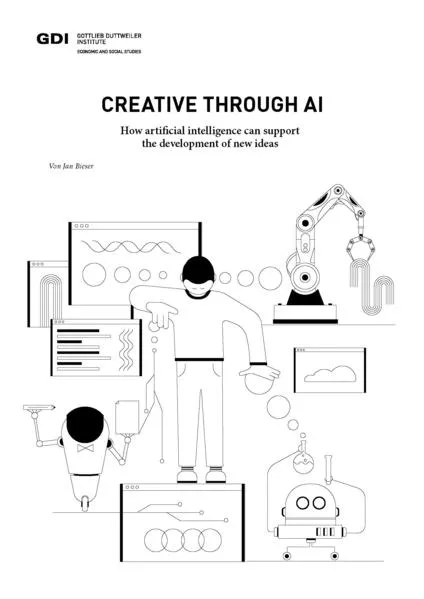
Creative through AI
Studies suggest that we have fewer and fewer new and ground-breaking ideas, even though research investments are higher than ever. One great hope to reaccelerate the pace of innovation lies in artificial intelligence (AI). However, radical innovation—ideas that fundamentally change the status quo — requires skills that are usually only ascribed to humans: asking surprising and new types of questions, identifying associations between unrelated fields and conducting exploratory experiments. In fact, today’s leading opinion is that AI is not able to develop fundamentally new ideas on its own; but that there are ways in which AI can support humans in doing so: AI can augment human creativity.
So, if we can use AI to unleash our full creative potential, we need to know:
How can AI support human creativity in practice?
What are the limitations of AI?
Can AI even impede human creativity?
The study provides answers to these questions and an inspiring overview of how people and organisations can already use AI today to support creative processes. The surprising conclusion: human creativity needs to be augmented with and protected from AI at the same time. In the future, it is likely that the most successful ideas do not come from bright thinkers alone, but also from those who are best at steering machines in their desired directions.
So, if we can use AI to unleash our full creative potential, we need to know:
How can AI support human creativity in practice?
What are the limitations of AI?
Can AI even impede human creativity?
The study provides answers to these questions and an inspiring overview of how people and organisations can already use AI today to support creative processes. The surprising conclusion: human creativity needs to be augmented with and protected from AI at the same time. In the future, it is likely that the most successful ideas do not come from bright thinkers alone, but also from those who are best at steering machines in their desired directions.
- Band: 43
- Autor: Hauser, Mirjam
- Anzahl Bewertungen: 0
- Ø Bewertung:
- Medium: Digital
- Veröffentlicht: 01.09.2015
- Genre: Sonstiges
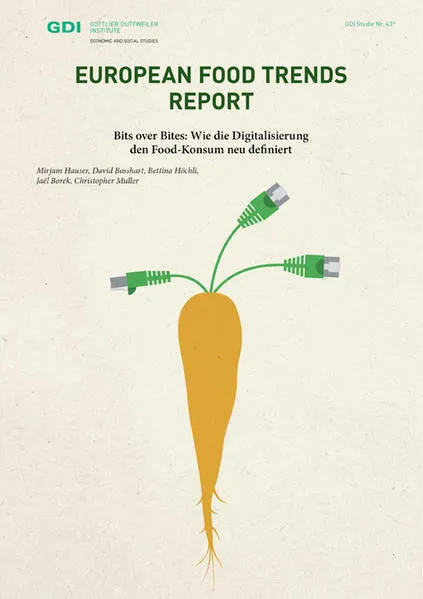
European Trend Food Report
http://www.gdi.ch/de/Think-Tank/Studien/European-Food-Trends-Report/674
Biologisch, regional und frisch: Solche Verpflegungsangebote gewinnen seit Jahren an Bedeutung. Das Bedürfnis nach Echtheit, Natürlichkeit und Nachvollziehbarkeit nimmt weiter zu beim Durchschnittseuropäer, dessen Alltag geprägt ist von Mobilität und Flexibilität.
Immer öfter bietet dabei die Digitalisierung neue Lösungen: Viele der neuen Angebote helfen uns mit Technologie, zu frischen und lokalen Bio-Produkten zu kommen. Es reicht ein Blick ins Silicon Valley, um zu erkennen: Die Digitalisierung hat die Food-Branche erreicht.
Der Fokus der Investoren liegt hier insbesondere auf Lieferdiensten, welche die letzte Meile – den letzten Lieferabschnitt bis hin zur Haustür des Kunden – überbrücken. Neue, teils branchenfremde Start-ups wie Uber oder Instacart fordern etablierte Akteure heraus und verändern die Food-Welt – und zwar grundlegend. Alles wird neu gemischt: Wer was und wie herstellt, verarbeitet, vertreibt, konsumiert. In der ganzen Wertschöpfungskette des Essens heisst es für die Zukunft: Bits dominieren Bites.
Doch auch wenn die digitalen Angebote immer attraktiver werden, bleiben soziale Momente, Sinnlichkeit und Inspiration in der physischen Welt grosse Bedürfnisse. Was bedeutet dieses Spannungsfeld für Produzenten und Anbieter? Wie kann die Food-Branche auf die Umgestaltung der Wertschöpfungskette reagieren? Welche Trends entstehen an der Schnittstelle von digital und analog?
Biologisch, regional und frisch: Solche Verpflegungsangebote gewinnen seit Jahren an Bedeutung. Das Bedürfnis nach Echtheit, Natürlichkeit und Nachvollziehbarkeit nimmt weiter zu beim Durchschnittseuropäer, dessen Alltag geprägt ist von Mobilität und Flexibilität.
Immer öfter bietet dabei die Digitalisierung neue Lösungen: Viele der neuen Angebote helfen uns mit Technologie, zu frischen und lokalen Bio-Produkten zu kommen. Es reicht ein Blick ins Silicon Valley, um zu erkennen: Die Digitalisierung hat die Food-Branche erreicht.
Der Fokus der Investoren liegt hier insbesondere auf Lieferdiensten, welche die letzte Meile – den letzten Lieferabschnitt bis hin zur Haustür des Kunden – überbrücken. Neue, teils branchenfremde Start-ups wie Uber oder Instacart fordern etablierte Akteure heraus und verändern die Food-Welt – und zwar grundlegend. Alles wird neu gemischt: Wer was und wie herstellt, verarbeitet, vertreibt, konsumiert. In der ganzen Wertschöpfungskette des Essens heisst es für die Zukunft: Bits dominieren Bites.
Doch auch wenn die digitalen Angebote immer attraktiver werden, bleiben soziale Momente, Sinnlichkeit und Inspiration in der physischen Welt grosse Bedürfnisse. Was bedeutet dieses Spannungsfeld für Produzenten und Anbieter? Wie kann die Food-Branche auf die Umgestaltung der Wertschöpfungskette reagieren? Welche Trends entstehen an der Schnittstelle von digital und analog?
- Band: 43
- Autor: Hauser, Mirjam
- Anzahl Bewertungen: 0
- Ø Bewertung:
- Medium: Digital
- Veröffentlicht: 01.09.2015
- Genre: Sonstiges
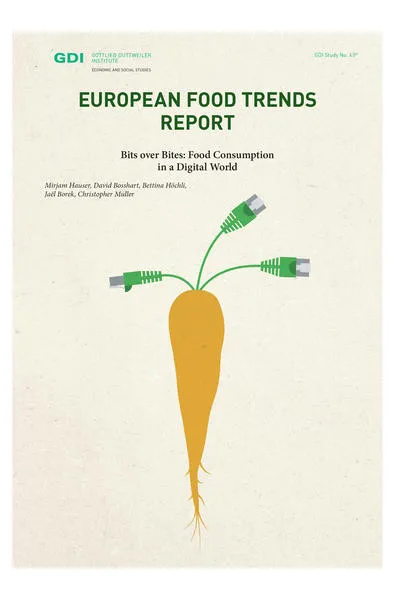
European Trend Food Report
http://www.gdi.ch/en/Think-Tank/Publications/European-Food-Trends-Report/674
Bits over Bites: Food Consumption in a Digital World
Languages: German, English
Authors: Mirjam Hauser, David Bosshart, Bettina Höchli, Jaël Borek, Christopher Muller
Organic, local and fresh: the importance of these qualities in food offerings has been growing for years. As everyday life becomes steadily more mobile and flexible, the average European demands greater authenticity, naturalness and transparency in all matters relating to food.
Digitalisation is at hand to help, developing new solutions all the time: many of the new offerings employ technology to enable better access to fresh, local, organic products. Silicon Valley has taken the lead in bringing digitalisation to the food sector.
Investors are focusing in particular on delivery services covering the last mile, i.e., getting the customer's order to the front door. New start-ups, some of them from outside the sector, e.g. Uber and Instacart, are challenging established actors and changing the world of food – radically. Everything is being remixed: who makes, processes, distributes and consumes what how. The future of the food supply chain in a nutshell is: bits dominate bites.
Notwithstanding the growing appeal of digital offerings, in the physical world people still look for the social element, sensuousness and inspiration. What does the tension between these demands mean for producers and providers? How can the food industry react to the transformation of the supply chain? What trends are emerging at the interface of digital and analogue?
Bits over Bites: Food Consumption in a Digital World
Languages: German, English
Authors: Mirjam Hauser, David Bosshart, Bettina Höchli, Jaël Borek, Christopher Muller
Organic, local and fresh: the importance of these qualities in food offerings has been growing for years. As everyday life becomes steadily more mobile and flexible, the average European demands greater authenticity, naturalness and transparency in all matters relating to food.
Digitalisation is at hand to help, developing new solutions all the time: many of the new offerings employ technology to enable better access to fresh, local, organic products. Silicon Valley has taken the lead in bringing digitalisation to the food sector.
Investors are focusing in particular on delivery services covering the last mile, i.e., getting the customer's order to the front door. New start-ups, some of them from outside the sector, e.g. Uber and Instacart, are challenging established actors and changing the world of food – radically. Everything is being remixed: who makes, processes, distributes and consumes what how. The future of the food supply chain in a nutshell is: bits dominate bites.
Notwithstanding the growing appeal of digital offerings, in the physical world people still look for the social element, sensuousness and inspiration. What does the tension between these demands mean for producers and providers? How can the food industry react to the transformation of the supply chain? What trends are emerging at the interface of digital and analogue?